
Sometimes the best musical discoveries are the ones you don’t see coming. I walked into Soul recently to see Mother’s Cake, knowing very little about the opening act. But from the moment Come took the stage, the atmosphere shifted. It’s not very often to find a new band that feels like a breath of fresh air, but their performance was exactly that. Raw, high energy and completely authentic. What struck me immediately wasn’t just the music but their outstanding passion and the natural chemistry they shared on stage. They didn’t just play a set. They commanded the room with a stage presence that felt both effortless and intense. After a show like that, I knew I had to learn more about the trio behind the noise. I sat down with the band to talk about their origins, how they piece their songs together and the internal spark that drives them on stage.
by Panos Niko
I’ve seen you mention a pagan wedding followed by a summer of busking in Mykonos. That sounds like a fever dream. Can you paint a picture of what those days looked like?
Daphne: Come is our love child. We used to be together and literally got married in a forest. The following summer, we went to Mykonos to busk, trying to make money to fund the band we wanted to create. Our marriage failed, but our music relationship didn’t.
How was Come formed and what sparked the idea to start the band? Give us a short biography of the band.
Theo: Come were formed when Daphne and I were talking about our shared dream of touring outside Greece and playing as many shows as possible. At the time, we were both involved in different bands where that kind of flexibility wasn’t realistic. Our initial idea was to create a duo with just vocals, guitar, and drum machines, drawing inspiration from the setup of The Kills. We wanted what I like to call a pocket-sized band and not rely on many people or a lot of gear. That is why our first single, “The Evil” features drum machines. A few months after its release, we were invited to play our second show, and we felt it would be easier to bring in a live drummer. I reached out to my bandmate from Echo Train, Gregorio Perico, to join us. Once we heard our songs performed with drums, there was no going back. At that time, Gregorio was a perfect fit. We played and recorded with Gregorio for nearly two years. Then, during our first European tour last September, Lia joined the band and became a permanent member.
How did you come up with the name Come, what was the idea behind it?
Daphne: We wanted a minimal one-word name. We love it when people ask us how it is written. It could be Cam or Cum and actually it is all of the above.
How would you describe your sound to someone who’s never heard your music before?
Theo: I find it difficult to describe because, to me, it just sounds like a combination of our personalities. So, I have come up with a little trick. I ask the closest person within reach and pass the question on to them, most likely Daphne.
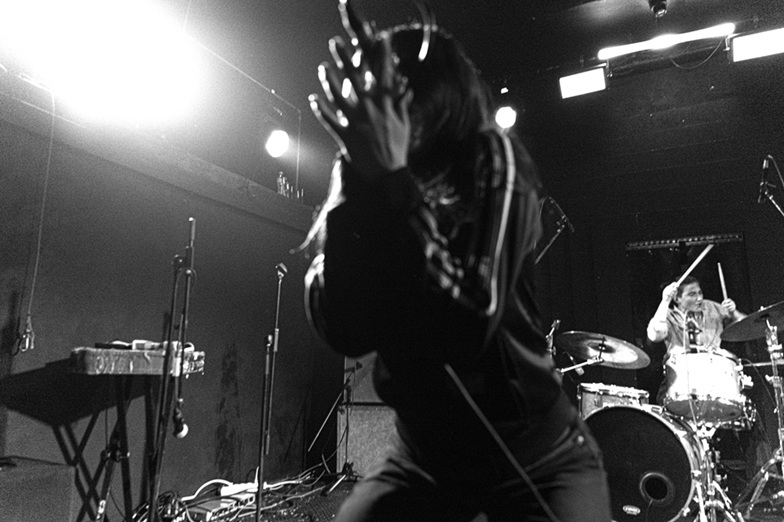
Can you tell us a bit about the band members and how each one contributes to your band’s sound?
Lia: This group, for me, is a very different collection of people, because it did not happen out of necessity or closeness to each other, or because of a shared niche music interest. We came together because of the way we perceived music and performance, and the way we vibed together as people first. I feel we come from varied musical backgrounds that share the same principles in terms of authenticity and rawness in sound. I can only say that we all contribute by being truly ourselves musically, unconcerned with genre related or typological limitations.
How is a typical Come song composed? Tell us a bit about your writing process.
Theo: Half the songs are composed on the spot while rehearsing for a gig on the same day, only to end up on the setlist that same night. It puts us in this strange, exciting position where you know you are going to mess up, but you cannot help it. It is like being drunk and flirting with a random person at a bar. You start off confident, try to play it cool, and end up doing something stupid. Sticking to the topic, the other half of the songs come from riffs and lyrics we have collected, trying to complete the puzzle.
What inspires you to create music as individual musicians and as a band?
Lia: Personally, I perceive songwriting as another means of resistance. Creating something new, something that contains a part of yourself and has to align with two or three or even more people, goes against the way modern society works. Finding the time and place to communicate, or even “miscommunicate,” with others in non-verbal ways is, for me, a form of nonconformity, the way art has always intended. As a band, I think we are keen on writing songs that bring a bit of thunder on stage, on the road, or anywhere, really.
Where do your lyrics refer to and what is your inspiration?
Daphne: I usually draw inspiration from themes in my life that are present at that time. Writing lyrics sometimes feels like doing psychoanalysis on myself, in the sense that I come to realizations about my feelings simply by writing them down. “What A Perfect Way To Lose” and “Miscommunication” fall into that category. Other times, my lyrics are more playful, and I just want to create a feeling for me and for the audience. “Dance My Pain Away” is like a spell that makes you forget any worries when you dance.
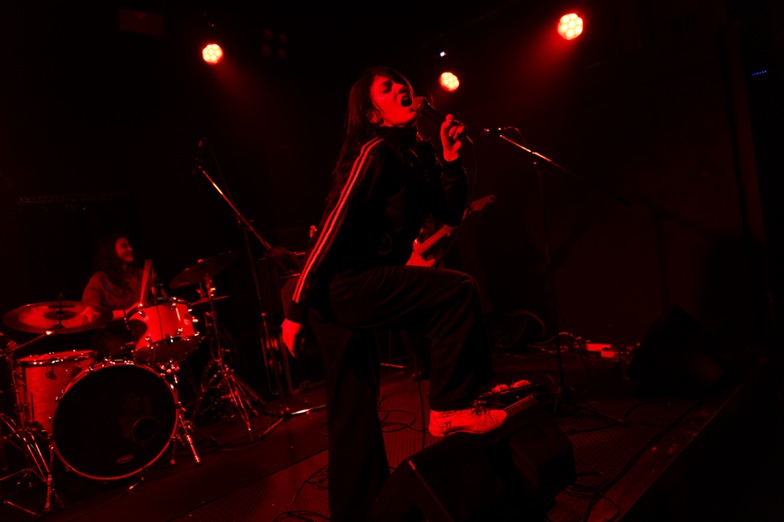
Which feelings of yours do you try to express through your music and lyrics?
Daphne: Continuing from the previous answer, I also talk about my ideas and how I experience my life, as well as how I would like to live it, like in “Rollerblades” and also in “Raw Papers”, which asks some more philosophical questions. I like to communicate these ideas with other people. Sharing my own perspective is very important to me.
What keeps you motivated to create and release music?
Daphne: That feeling we get when we play live. It is one of the best feelings we get to experience. There is this trance inside the community we build for that moment, forgetting that anything else exists except our bodies and the present moment.
How important are live shows for you? How would you describe the energy of your live shows?
Theo: Live shows are actually the reason this band exists. It is one of the few experiences in life where your mind shuts down and you just play, listen, dance, improvise, and have fun. A meditation of some kind.
Are there any specific artists or bands you’d like to tour or share the stage with someday?
Theo: I had the craziest idea, one that no one seems to agree with. Lia also plays in another band, Bahia Connection. Actually, our second gig ever was playing a show together, and since then we became very close friends. So my idea is that, since we share Lia, we do a tour where the two bands combine and tour as one under the name Come to Bahia Connection.
What are your biggest influences?
Lia: My drumming influences for this band are probably Matt Helders, Dave Grohl and John Bonham, mostly power-driven drummers with a strong sense of musicality. Or so I try. Sound wise, I feel I have been most influenced by neo soul and fusion drummers like David Garibaldi, Nate Smith and Perrin Moss. It is a weird mix, but the genre has room for it, I think.
When you play live, what do you want the audience to feel?
Theo: Themselves.
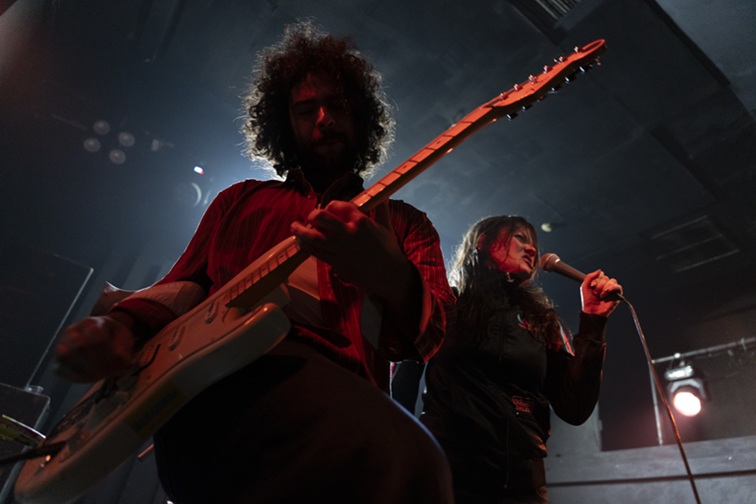
Was there a specific “breakthrough” track where the band’s creative chemistry and identity finally locked in?
Theo: I tend to look at songs as relatives of each other. For example, our song “Miscommunication” is the uncle of “What A Perfect Way to Lose”, while “Raw Papers” and “Dance My Pain Away” are twins. So, there is not a single breakthrough song. We care about all of them for different reasons. Of course, there are a few bad uncles at the family dinner, but even they give you good stories to tell.
Which song from Come means the most to you personally and why?
Theo: “Just the Guitars”. It is our most intimate moment when we headline a show, and I love the challenge of forcing people in the audience to be quiet and experience it with us.
What do you hope listeners take away from Come?
Theo: Some merch, so we can afford our next tour.
Do you have any plans for any future releases and are you working on something at the moment?
Theo: The next song we are going to release is called “Raw Papers” and it is part of our debut album, which, for the time being, you can only find on CD at our shows.
Send a message to our viewers
See you on the road.
