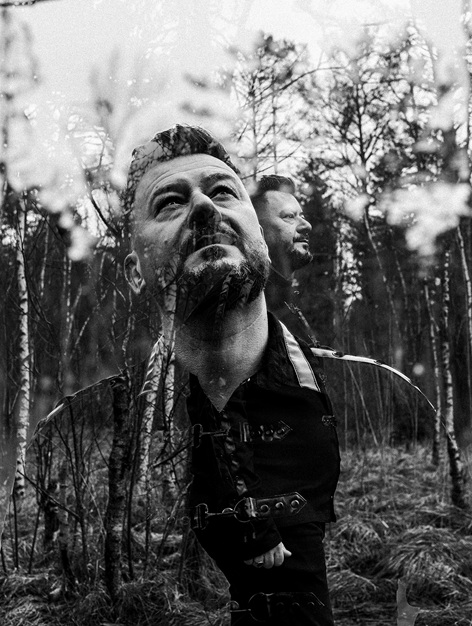
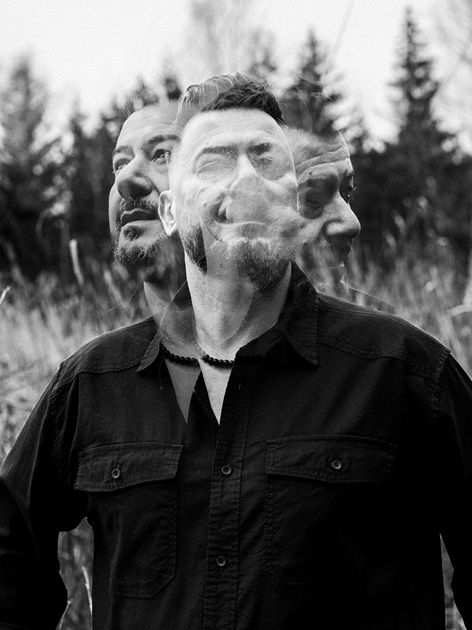
With the release of “Death”, Black Reuss brings to completion an ambitious four-album journey that began with “Metamorphosis” in 2021 and continued through “Journey” and “Arrival”. The project, led by Swiss musician and producer Maurizio Dottore, has gradually explored the different stages of human existence, transformation and the unknown, combining melodic gothic metal with doom and dark rock elements. Yet, rather than simply marking an ending, “Death” feels like a passage into something beyond our understanding. We had the opportunity to talk with Maurizio about the completion of this conceptual cycle, the musical and emotional evolution of Black Reuss, his influences, and his plans to bring the project to the stage. As he explains, the river has reached the sea, but the journey continues.
by Dimitris Zacharopoulos
You released the “Death” album some months ago. How do you see this new album now? Are you satisfied with the feedback to this album?
I’m very happy with how “Death” turned out. It is close to what I had imagined when I started the four-album concept, and listening to it now gives me a sense of closure. I’m grateful for the reactions from listeners. What matters most to me is that people spend time with the songs and find something of their own in them. I don’t want to claim a particular level of success based on numbers; I’m simply pleased that the music is reaching people.
“Death” completes the four-album journey that began with “Metamorphosis” in 2021. When you first conceived this ambitious project, did you already know where the river would eventually lead, or did the concept evolve naturally with each album?
The tetralogy was conceived as four chapters from the very beginning. I knew the stages—“Metamorphosis”, “Journey”, “Arrival” and “Death”—and even the artwork was developed as part of that original idea. What changed was me, and therefore the way I approached each record. The direction was fixed, but the music and my perspective evolved along the way. The river was always going to reach the sea.
Each album in the tetralogy seems to represent a different stage of an inner journey. How would you describe the evolution from “Metamorphosis” to “Death”, both musically and emotionally?
“Metamorphosis” was about confronting yourself and the things that need to change. Journey explored movement, struggle and the fact that progress is rarely linear. Arrival was more about awareness, finding some grounding and accepting that balance can be fragile. “Death” looks at what may lie beyond that journey. The first three records drew heavily on personal experience; “Death” is more interpretive because I have little direct experience of death itself. Musically, I’ve become more comfortable with restraint, atmosphere and leaving space in the arrangements.
The title “Death” might suggest an ending, but you describe it as a threshold leading to something new. What does death symbolize in the Black Reuss universe, and how should listeners interpret this final chapter?
I don’t see “Death” as a statement that death must mean a new beginning. The album places different possibilities alongside one another: judgment, oblivion, liberation, continuation, rebirth or peace. I don’t pretend to know which, if any, is right. In the river metaphor, the river reaches the sea and loses its familiar shape. What happens beyond that is unknown. I’d like listeners to bring their own interpretation rather than accept an answer from me.
Musically, “Death” seems to have a particularly dense and immersive atmosphere, combining gothic metal with doom and dark rock elements. How would you define the musical style of “Death”?
I’d call it melodic gothic metal with elements of doom metal, dark rock and traditional heavy metal. There are heavy guitars and strong melodies, but I wanted the music to breathe. The weight doesn’t always come from speed or aggression; sometimes it comes from the atmosphere, the space between notes and the way an arrangement develops.
Listening to the album, I find that its haunting melodies and relentless riffs create a fascinating balance between darkness and beauty. How important is this contrast in your compositions?
That contrast is very important to me. I’ve always been drawn to music that can be heavy and melancholic but still melodic and beautiful. Darkness doesn’t exclude beauty, and melancholy isn’t necessarily something negative. I like the tension between those elements. It gives the songs emotional depth without having to make everything louder or more dramatic.
Your vocals are a central part of Black Reuss’ identity. How do you approach the vocal melodies and emotional delivery when writing songs that deal with such profound themes as loss, surrender and transformation?
I start with what feels natural to my voice and what serves the song. I’m not a singer who relies on shouting or technical acrobatics, and I don’t try to pretend otherwise. I focus on melody, phrasing and delivering the words in a way that feels honest. Sometimes a restrained performance says more than a dramatic one. For me, conveying the emotion matters more than showing vocal range.
Tracks like “Endgame”, “Oblivion”, “Phoenix” and “Elysium” seem to explore different emotional dimensions of the same existential journey. Do you usually begin writing with a lyrical concept, a musical idea, or simply a particular feeling?
It varies. Sometimes there’s a musical idea or a guitar part, sometimes an atmosphere, and sometimes a subject I want to explore. With the tetralogy, the broader themes were already there, so I had a framework, but I never wanted the songs to feel like exercises in illustrating a concept. “Endgame”, “Oblivion”, “Phoenix” and “Elysium” each approach death from a different angle, and the music had to reflect those different perspectives.
Despite its dark atmosphere, “Death” never feels entirely pessimistic. There is always a sense of hope or redemption somewhere beneath the surface. Is this something you consciously try to incorporate into your music?
I don’t deliberately add hope to balance the darkness. I simply don’t see darkness and melancholy as purely negative. There can be beauty, calm and even comfort in them. On “Death”, some songs suggest an ending or an absence, while others explore continuation or peace. That variety comes from the concept itself, not from a need to give the listener a reassuring conclusion.
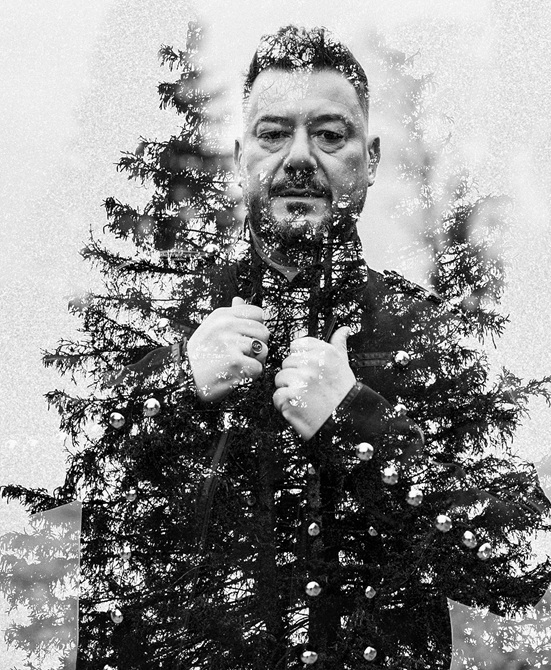
You wrote, composed, performed and produced the entire album yourself. What do you enjoy most about having complete creative control, and is there also a downside to carrying so much responsibility?
The greatest advantage is freedom. I can follow an idea without having to compromise the overall direction, and all the parts can serve the same atmosphere. The downside is that every decision and every doubt also comes back to me. It’s easy to keep questioning a detail when nobody else is there to say it’s finished. Over four albums, I’ve learned to trust my instincts more and to accept when a song has reached the point where it needs to be released.
You collaborated with Diego Rapacchietti of the legendary Swiss thrash metal band Coroner on drums. How did this collaboration come about, and what did his playing bring to the musical identity of “Death”?
I’ve known Diego for years, and we’ve worked together on previous Black Reuss recordings, so it wasn’t a new collaboration for “Death”. He’s an excellent drummer, but what I particularly value is his sense of dynamics and his ability to give a song weight without overcrowding it. His playing supports the atmosphere and leaves room for the other elements. That is exactly what this music needs.
Which artists or albums have had the greatest influence on your musical development?
Type O Negative is probably the biggest influence on Black Reuss. They showed me how heavy music could also be melodic, vulnerable and deeply atmospheric. Black Sabbath was foundational, and I also appreciate Paradise Lost and Katatonia. But I listen to a lot outside metal too—Depeche Mode, Radiohead, Pearl Jam, Neil Young, classical music and film scores. Albums such as “October Rust”, “Kid A”, “Ten”, “Live Rust”, “Black Sabbath” and “Led Zeppelin IV” have all meant a lot to me for different reasons.
Looking back at the four albums, is there a particular song that holds a special place in your heart, either because of its personal meaning or because it represents everything you wanted Black Reuss to become?
It’s difficult to choose one song from four albums because each represents a different period. If I had to introduce someone to the current Black Reuss sound, I’d choose “Oblivion”. It brings together the atmosphere, melody, heaviness and reflective character that I wanted for “Death”. That was also why I chose it to introduce the album. But personally, the entire four-album journey is more meaningful to me than any single track.
“Death” has been described as the final chapter of the tetralogy, but you have also hinted at new creative directions. Now that this ambitious cycle is complete, do you feel liberated to explore different musical territories?
Yes, definitely. The four-part structure gave me direction for years, and completing it is satisfying. At the same time, I now have the freedom to write without asking which chapter a song belongs to. I don’t plan to immediately start another long conceptual cycle. The introspective side of Black Reuss will remain, because that’s part of who I am, but I’m curious to see where the music goes without that predefined framework.
Do you consider Black Reuss a strictly studio-oriented project, or have you ever thought about bringing these songs to the stage? Would you like to see this music performed live?
Black Reuss began as a studio project, but I’ve always felt that the music could work very well live. We’re now putting that into practice with a full live band and shows planned for March 2027, including SoundArt in Romania and Bullhead Festival in Lucerne. The aim is not just to reproduce the recordings, but to add another layer through the performance and visual atmosphere while still giving people an engaging concert.
Gothic metal has been around for decades, and many bands have explored its darker and more atmospheric dimensions. What do you think makes Black Reuss stand apart from the rest of the scene?
I don’t think it’s my place to claim that Black Reuss is completely unlike anything else. The influences are there, and I’m happy to acknowledge them. What makes the project personal is that the writing, lyrics, arrangements and overall concept come from one perspective. Across four albums, I’ve tried to build a coherent musical identity rather than follow a trend or a particular formula. Hopefully listeners can hear that.
Send your message to our readers!
Thank you to everyone who has listened to Black Reuss and supported the music. I hope “Death” gives you something to connect with and perhaps some questions to think about. I’m looking forward to bringing the songs to the stage and meeting listeners along the way. The river has reached the sea, but the journey continues. You can find everything at https://linktr.ee/blackreussmusic. And thank you to Myth of Rock for the interview.