
Scorpions are one of the most recognizable, beloved and celebrated bands in rock and metal history. However, back in the 1970s, Scorpions were among the true pioneers of heavy music, playing what was, without exaggeration, the heavy metal of that era. Among the classic albums of the band’s ‘70s period, we find masterpieces such as “Virgin Killer” and “Taken by Force”. This year marks fifty years since the release of “Virgin Killer”, an album that also serves as the foundation of the current tour of one of the key figures of Scorpions’ 1970s lineup, Uli Jon Roth. The legendary guitarist is set to perform live in Greece in early June (on June 5th), and on this occasion, Myth of Rock takes a deep and detailed look at “Virgin Killer”.
by Dimitris Zacharopoulos
When people talk about Scorpions, albums like “Lovedrive”, “Blackout” or “Love at First Sting” usually dominate the conversation. Those records made the German legends worldwide superstars. But if you really want to understand where the band’s metallic identity was forged, you have to go back to November 22, 1976, when Scorpions released their fourth studio album, “Virgin Killer”, via RCA Records.
This was the album where Scorpions stopped sounding like a psychedelic hard rock experiment and became something much darker, sharper and more dangerous. It was also the record that caused one of the most controversial album cover scandals in rock history — a controversy that somehow exploded all over again more than 30 years later thanks to Wikipedia. And somehow, beneath all the chaos, sits one of the greatest hard rock albums of the 1970s.
By 1976, Scorpions were still evolving. Their debut, “Lonesome Crow” (1972), had been a weird, hypnotic, psychedelic hard rock record. It sounded nothing like Scorpions most fans know today. Then came “Fly to the Rainbow” (1974), where things got heavier and more melodic. But it was “In Trance” (1975) that hinted at greatness. That album introduced producer Dieter Dierks, whose polished yet aggressive production style would become essential to Scorpions’ sound. It also showed Uli Jon Roth growing into a monster player, blending Hendrix-inspired psychedelic phrasing with early neoclassical ideas.
“Virgin Killer” was the next step — and a huge one. That’s where Scorpions became heavy metal! This record sounds fully formed. You can hear the DNA of Scorpions everywhere: razor-sharp riffs, huge hooks, melodic sophistication and dark emotional intensity. The opening track, “Pictured Life”, is one of the greatest songs they ever recorded. That riff is pure electricity. It’s urgent, precise and addictive. You can hear future speed metal and power metal hidden inside it. Then there’s “Catch Your Train”, a relentless rocker that proved Scorpions could match any British hard rock band for raw energy. “In Your Park” slows things down into haunting melancholy, while “Backstage Queen” captures their sleazy glam side before exploding into muscular hard rock. The title track, “Virgin Killer”, has nothing to do with exploitation. Roth wrote it as a metaphor for how time destroys innocence. And it is a mad heavy metal song, with its furious riff and its catchy refrain!
And then there’s the second side, where Uli Jon Roth completely takes over. “Hell-Cat” is strange and playful, featuring Roth on vocals. “Crying Days” is emotional and beautiful, one of Klaus Meine’s most underrated vocal performances. Then comes the legendary “Polar Nights” and “Yellow Raven”. Both penned by Roth, they are the album’s true artistic peak! “Polar Nights” is incredible, featuring a riff that is proto-metal perfection – and Roth’s soloing is from another dimension. Yngwie Malmsteen and countless neoclassical shredders owe a debt to what Roth was doing here. “Yellow Raven” closes the album in epic, mystical fashion, almost like a fantasy soundtrack crossed with heavy rock. It remains one of Scorpions’ most unique songs.
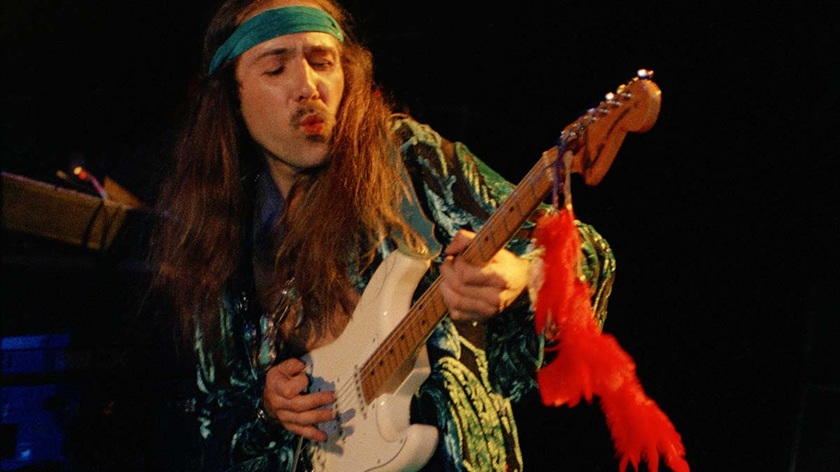
“Virgin Killer” proves two things. Firstly, that Scorpions were transformed into a heavy metal band. And secondly, that Uli Jon Roth was one of rock’s most underrated guitar visionaries. He wasn’t just a fast, skilled lead guitar player – he redefined the whole lead guitar playing! Years before shred guitar became fashionable, Roth was fusing Hendrix, classical influence and metallic aggression into something entirely new. Even today, his playing in “Virgin Killer” feels futuristic! Ironically, he would leave the band two years later after “Taken by Force”, because he wanted to pursue more experimental music. Both his presence in the band and his departure from the band changed Scorpions forever! And Virgin Killer” captures him at his absolute peak!
Even Roth later admitted this and “In Trance” were his favorite Scorpions albums.
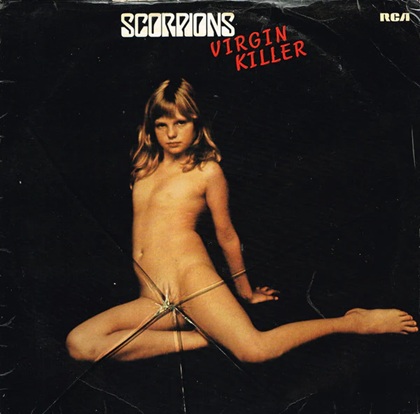
Of course, no discussion of “Virgin Killer” can avoid the cover. The original artwork showed a nude ten-year-old girl with shattered glass obscuring her genitals, was designed by RCA product manager Steffan Böhle and photographed by Michael von Gimbut. The band has repeatedly said it was the record label’s idea, not theirs. Rudolf Schenker defended it for years as symbolic art representing lost innocence, though he later admitted they would never do something like that again. Uli Jon Roth eventually called it “the worst possible taste” and said he regretted not stopping it, and Klaus Meine later admitted there were always mixed feelings about it. Many countries refused to display it openly. Some sold it sealed in black plastic. Others replaced it with the now-familiar alternate band photo cover.
As far as the album cover is concerned, here’s one of rock’s weirdest trivia stories. In 2008, the UK’s Internet Watch Foundation blacklisted the Wikipedia page for “Virgin Killer”, claiming the cover image was potentially illegal. This effectively blocked much of Britain from viewing or editing the page. The backlash was immediate: after just four days, the block was reversed because it caused massive public criticism and only drew more attention to the image — a perfect example of the Streisand Effect. Even the FBI had reportedly reviewed the cover years earlier and found it violated no US law. Then in 2015, a Swedish court ruled it could be considered child pornography. And in 2026, the debate resurfaced again when Finnish child-protection advocates urged Wikipedia to remove it. Fifty years later, the controversy still follows the album.
What about the album’s commercial success? While “Virgin Killer” struggled commercially in America, Japan embraced it. It reached No. 32 on the Japanese charts, proving Scorpions already had serious international appeal long before “Rock You Like a Hurricane”. Japan would remain one of the band’s strongest markets for decades.
Today, “Virgin Killer” is considered one of the great heavy metal albums of the 70s and is a cornerstone in the band’s career — fearless, inventive, melodic and heavy in ways that still sound fresh. This is a real Scorpions classic! No doubt about it!
