
In the distant past, the skies over the UK and Northern Europe grew increasingly cloudy, bleak, and somber. The lords of atmospheric metal emerged, weaving doom/death melodies for a world hungry for obscurity, heaviness, and melancholy. Meanwhile, things in Southern Europe were different, yet from Portugal came a remarkable exception. Moonspell, rooted in folk/pagan black metal, burst onto the scene with “Wolfheart”, a dark gem defined by its peculiar gothic aesthetics.
by Alex Nikolaidis
This album has always held a special place in my preferences, since it was one of the first releases of the so-called extreme metal that truly captivated me. As someone fascinated by tales of fantasy and mystery at the time, its dark aura, rawness, and shadowy atmosphere stirred my imagination instantly. Even now, decades later, it still occupies my ears from time to time – I guess it’ll always be part of my personal soundtrack!
“Wolfheart” marked an impressive debut for a band already active within the black metal community. In the first half of the 90s, Moonspell released the demo “Anno Satanæ” (1993) and the EP “Under the Moonspell” (1994), both of which laid the foundation for their first full-length album. Though raw and unrefined, these early works revealed the primordial face of a band that intended to carve their own identity.
The creation of “Wolfheart”, however, required a more professional approach. After signing with Century Media, the band began working with producer Waldemar Sorychta. Already gaining recognition for his work with Tiamat, Samael, Unleashed, and The Gathering — as well as his role in Grip Inc. — Sorychta played a crucial role in shaping Moonspell’s sound (a role that marked the beginning of a long collaboration, since he produced six of their albums in total).
Without diluting Moonspell’s raw edge, he helped them channel their energy with precision, bringing their darkness into sharper focus. In “Wolfheart”, we hear the band emerging from their black metal roots while expanding their branches into melodic, gothic territories. The album stands as an offspring of black and gothic metal, blending the aggression of the former with the mystery, melancholy, and romanticism of the latter. Simultaneously, folk touches, mainly found in “Trebaruna” and “Ataegina”, add a pagan, celebratory tone, like echoes of an ancient ritual dance.
“Wolfheart” features several tracks that have become fan favorites and remain staples of Moonspell’s live shows. Vocalist and lyricist Fernando Ribeiro has always drawn inspiration from literature, poetry, mythology, folklore, and similar sources. In the album, he explores themes of werewolves, vampires, love, and tradition in patterns that catch the listeners’ attention easily, almost instantly. The band crafted intriguing themes, balancing harshness with sweeping melodies, with keyboards playing a prominent role throughout.
“Wolfshade (A Werewolf Masquerade)” opens the album ideally with an imposing introduction that conjures visions of nocturnal creatures emerging from the shadows. With its compelling riffs and romanticism, the track became a defining moment for Moonspell. “She brought the night and by the night was brought, we are but children of the powers she had set free…” screams Ribeiro passionately in lyrics that have lingered in listeners’ minds ever since.
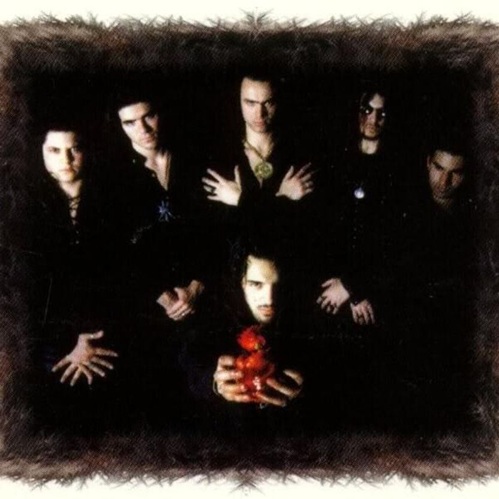
“Love Crimes” follows with a more traditional heavy metal feel, driven by powerful guitar work and an excellent atmospheric passage that leads seamlessly into “…of Dream and Drama (Midnight Ride)”. This faster, electrifying track carries hints of punk energy, urging the listener to join its momentum. The brief instrumental “Lua d’Inverno” then sets the stage for “Trebaruna”, a lively folk-inspired piece sung in Portuguese, celebrating the “Daughter of pain”, the “Goddess of Love”. By this point in the album, you realize how skillfully Moonspell combine a variety of elements into something authentic and beautiful under their own prism.
Yet the most spine-chilling moments arrive later. “Vampiria” is a triumph of dark beauty – the exemplary way its melodies unfold, the enveloping atmosphere, the darkness it releases, and Ribeiro’s gripping performance create a piece that became inseparable from Moonspell’s identity. The whispered introductory lines (“Vampiria, you are my destiny, My only love and true destiny…”) still haunt me, and the song’s escalation still sends me to another dimension even after thirty years. “Vampiria” is Moonspell’s very essence – let’s say that without it, their story would feel incomplete!
A more pronounced gothic orientation is also evident in “An Erotic Alchemy”, where magnificent keyboard melodies and the interplay between Ribeiro and Birgit Zacher’s vocals create a sensual tableau. Moonspell embraced romanticism with confidence, and Ribeiro’s voice was naturally suited to this mood, bringing these ideas to life. The closing “Alma Mater”, a dark, poetic hymn, is dedicated to Portugal as a mythical ancestral homeland. With its intensity, subtle melancholy, and unforgettable guitar lines, it encapsulates the band’s character, being an iconic track and fitting conclusion to a remarkable debut.
Moonspell went on to explore the darker, atmospheric realms of metal throughout their career. Their peak occurred early – “Wolfheart” and its successor “Irreligious” remained unsurpassable, defining the aesthetics of gothic romanticism in metal. Their debut was so accessible and so well-crafted that it stayed with us permanently. Each fan follows their own musical path, but no matter where our journeys lead, we occasionally find ourselves returning to 1995, when “Vampiria” first spread her wings.
⇒ SOME FACTS
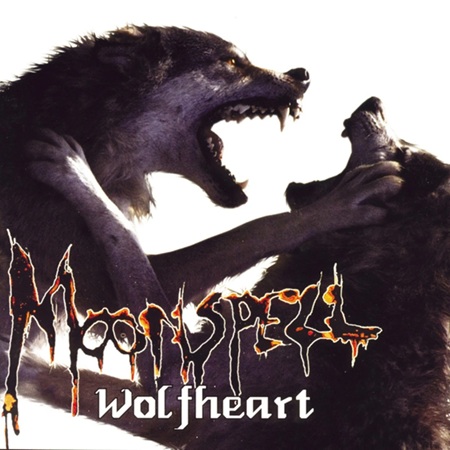
- Axel Hermann’s original cover art is more atmospheric, depicting wolves beneath a moonlit sky. The digipak edition has an alternate cover showing two wolves fighting against a white background.
- “Ataegina” was omitted from the original version of “Wolfheart” but appeared as a bonus track in the digipak release.
- In 2010, the Portuguese Postal Service issued an official stamp featuring the digipack artwork as part of a series honoring notable Portuguese artists.
- The original version of “Vampiria” lasted 12-13 minutes. Under Sorychta’s guidance, it was cut down into the 5-minute track.
- Fernando Ribeiro has clarified that “Alma Mater” celebrates Portugal’s heritage and memory, not nationalism in a political or exclusionary sense.
- “An Erotic Alchemy” was inspired by the writings and actions of Marquis de Sade.
- Traveling to Germany for the album’s production was a new experience for the band. Literally! Ribeiro recalls that it was his first time flying!
