
After releasing the symphonic and progressive rock masterpiece “El Dorado”, Electric Light Orchestra began working on its follow-up album, “Face The Music”, recorded at the legendary Musicland Studios in Munich, Germany. Jeff Lynne composed a record that marked the beginning of a brand-new era for ELO—one defined by a more song-oriented, streamlined, and radio-friendly approach. This new chapter turned out to be the most popular and commercially successful period in the band’s history, filled with timeless hits that would dominate the charts for years to come. Yet, despite this shift toward accessibility, ELO never abandoned their progressive roots or their love for rich classical orchestrations. The result was the signature ELO sound—a perfect blend of rock energy, hooky melody, and symphonic grandeur—that generations of fans have cherished ever since. In this article, we’ll dive into the band’s fifth studio album, exploring its background, its music, and its lasting legacy, 50 years after its release. So, what are you waiting for? Hit play, turn up the volume, and enjoy all the fascinating details behind this classic ELO masterpiece!
by Dimitris Zacharopoulos
Apart from being a remarkable artistic achievement, El Dorado also became a major commercial success—especially in the United States, where it earned a gold certification. This first taste of widespread recognition gave Jeff Lynne the confidence and determination to move forward with even greater focus, intent on writing songs that would make music history. And that’s exactly what happened, as Face the Music went on to achieve platinum status!
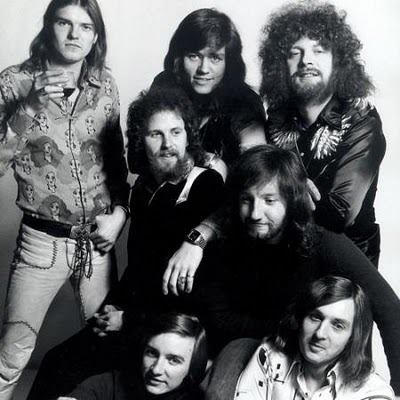
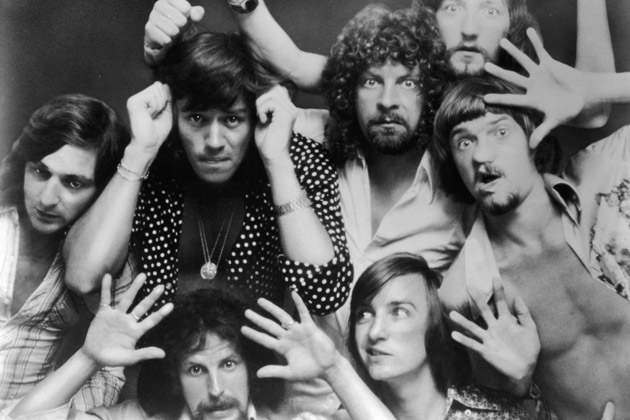
In 1975 there were some important changes in ELO’s line-up; Mike de Albuquerque had departed during the El Dorado recording sessions, while cellist Mike Edwards left shortly after the subsequent tour. These musicians were replaced by Kelly Groucutt and Melvyn Gale respectively – they both were crucial for ELO’s sound, Groucutt with his humble bass playing and his harmony vocals, Melvyn with his distinctive cello sound. That’s how the classic line-up was formed!
During the first North American leg of the El Dorado tour, ELO often served as the opening act for Deep Purple, one of the biggest hard rock bands of the era. Sharing the stage with such a powerhouse not only gave ELO invaluable exposure to larger audiences but also allowed them to refine their live performance and stage presence. And Deep Purple, impressed by ELO’s musicianship and unique fusion of rock and classical elements, recommended Musicland Studios in Munich—a state-of-the-art recording facility they themselves frequently used. That studio would soon become the place, where Jeff Lynne crafted many of ELO’ s most celebrated works, developing a strong and productive working relationship with sound engineer Reinhold Mack along the way!
New elements were introduced to create a richer, more sophisticated sound. Among these were female backing vocalists—Ellie Greenwich, Susan Collins, Nancy O’Neill and Margaret Raymond, a full choir and an expanded orchestral arrangement. The band’s string trio of Mik Kaminski, Hugh McDowell, and Melvyn Gale was integrated into the larger 30-piece string section, blending seamlessly with it while still being given the opportunity to perform standout solo parts on the recordings. The orchestral parts were recorded separately from the band’s main sessions, taking place at De Lane Lea Studios in London, England. The album was mixed at The Record Plant, in New York City.
“Face the Music”—a phrase meaning “to be confronted with the unpleasant consequences of one’s actions”—opens with one of ELO’s most distinctive instrumentals, “Fire On High”. This haunting symphonic/progressive rock piece showcases intricate orchestral arrangements, powerful rock passages with Jeff Lynne’s soaring guitar solos, Richard Tandy’s mesmerizing keyboards, and lush choral sections. Adding to its mystique, drummer Bev Bevan delivers a back-masked message: when played in reverse, it clearly states, “The music is reversible but time is not. Turn back, turn back, turn back, turn back.” This playful addition was an inside joke by Jeff Lynne, created in response to mild controversy from a Christian fundamentalist group that had accused him of embedding backward Satanic messages in “Eldorado” from ELO’s previous album. A fan favorite and a historic prog-rock milestone, “Fire On High” was also released as the B-side of the US single “Sweet Talkin’ Woman” and the UK single “Livin’ Thing”.
The album’s second track, “Waterfall”, is a stunning ballad featuring exceptional vocal melodies, rich instrumentation, and intricate arrangements. Its refrain, in particular, is irresistibly catchy. Although the song wasn’t released as a single in most countries, it did see single releases in France and Australia, where it became a minor hit. Jeff Lynne has often cited “Waterfall” as one of his personal favorite songs in the entire ELO catalog.
Next comes “Evil Woman”, widely regarded as one of the greatest rock songs ever written and one of ELO’s most iconic hits. Jeff Lynne composed the track in just a few minutes near the end of the Face the Music studio sessions in June 1975. Originally intended as a filler to extend the album’s runtime, it quickly blossomed into a global hit and was released as a single just a month after the album’s debut. The song’s magic lies in its perfect blend of elements: Richard Tandy’s sparkling piano, a warm and infectious groove, Lynne’s signature sweet vocals, Bev Bevan’s powerful drumming, and the breathtaking orchestral strings. Together, they create a true masterpiece—a brief but stunning showcase of Jeff Lynne’s artistry and a shining example of rock ’n’ roll brilliance. Simply gorgeous!
The first side of the vinyl closes with “Nightrider”, a mid-tempo prog-rock track infused with classical music influences, dynamic rock passages, intricate keyboards, and tasteful female backing vocals, all showcasing Jeff Lynne’s imaginative songwriting. The song is particularly notable for featuring both Lynne and Kelly Groucutt on lead vocals, though they alternate rather than sing together. Released as a single, “Nightrider” failed to chart, despite its sophisticated arrangement and undeniable musical finesse.
The B-side kicks off with a powerful rocker: “Poker”. This fast-paced, hard-hitting track features Kelly Groucutt on both lead and harmony vocals—one of the rare occasions where Jeff Lynne does not take the lead. Bev Bevan delivers explosive, high-energy drum fills between the verses, while Richard Tandy drives the rhythm with a moog synthesizer arpeggio. Midway through, the song slows into a bluesy bridge with the line “Play me another hand” complemented by Tandy’s subtle synthesizer accents. A magnificent rock track, “Poker” is a shining example of rock ’n’ roll history written in golden letters!
Next comes “Strange Magic,” a beloved ELO classic that commands nothing but admiration. Released as the second single from Face the Music in February 1976, this mid-tempo track has become a live staple for the band. Its charm lies in Jeff Lynne’s enchanting vocals, the lush interplay of violins and cellos, and Richard Tandy’s delicate, melodic keyboards. True to its name, “Strange Magic” is exactly that—pure, unadulterated magic.
Following that is “Down Home Town,” a country-rock gem that highlights ELO’s musicianship and artistic vision. With its roots in American folk-rock, the song captivates with lush orchestral arrangements, charming vocals, and playful, Western-inspired lyrics. Another standout track, it serves as yet another testament to Jeff Lynne’s genius.
“One Summer Dream” closes out the album as its eighth and final track. A serene and enchanting piece, it mesmerizes with its rare beauty and evocative, mysterious soundscapes. Interestingly, Jeff Lynne’s father—who had been vocally critical of his early work—admired the song so much that he would hum it regularly. In the Flashback notes, Lynne described it as a kind of “protest” song. It’s a track that lifts you, telling a musical story that captivates the imagination and lets you dream endlessly—a perfect conclusion to a majestic, phenomenal art-rock album.
Notably, the orchestra for the whole album was conducted by the one and only Louis Clark.
Face the Music stands as one of Electric Light Orchestra’s finest albums—a true showcase of symphonic and progressive rock at its best. The record seamlessly blends a variety of musical styles, combining rock energy with lush orchestral arrangements, intricate keyboard work, and inventive songwriting. Every track demonstrates the extraordinary collaboration between the band and the orchestra, all masterfully guided by the incomparable Jeff Lynne. His visionary direction turns the album into a cohesive, unforgettable musical journey, cementing Face the Music as a timeless masterpiece in ELO’s legendary catalog.